







Free initial advice
Public Liability Claim FAQs
If you've been hurt, our trusted solicitors can help
No upfront fees. No obligation. A specialist will review your enquiry and come back to you.
Trusted by injured people across the UK


Free initial advice
If you've been hurt, our trusted solicitors can help
No upfront fees. No obligation. A specialist will review your enquiry and come back to you.
Trusted by injured people across the UK
This FAQ guide to making a public liability claim explains the process of seeking compensation for being injured in a public accident.
We outline when it is possible to claim against an organisation, company or body that operates a space that the public can utilise or visit. For useful background information about public liability claims, we cover the legislation that sets a public space occupier’s duty to keep visitors safe and explain what public liability insurance is.
Furthermore, the guide answers the questions of how long you have to start a personal injury claim and what evidence you will need to present.
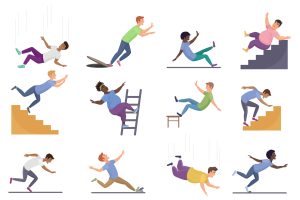
Find Out Answers To FAQs on Public Liability Claims
Finally, we discuss how one of our expert solicitors could help a claim to progress as smoothly as possible under No Win No Fee terms. We’ll answer a number of questions here, but if you have more, just get in touch with us. An advisor can provide further information and offer a free assessment so you can see if you have a valid claim.
To reach out, either:
A public liability claim is a claim made against an occupier of public space for an injury caused on their premises due to them breaching their duty of care. People in control of public spaces have to follow the Occupiers’ Liability Act 1957, and this piece of legislation applies the duty of care to occupiers to take steps to keep visitors using the space for its intended purposes reasonably safe.
To be eligible to make a public liability claim against an occupier, you must be able to satisfy these criteria:
These criteria form the definition of negligence in tort law, which you must prove in order to succeed in a claim.
If you have any questions about how to make a public liability claim, please call or get in touch online.
Those operating a public area are likely to have public liability insurance. This cover protects them in the event that a third party suffers an accident on their premises and makes a claim.
If you claim for a public accident against an insured individual or organisation and win, their public liability insurance provider would pay the compensation awarded to you. If the defendant does not have insurance, you would recover the compensation directly from them.
The time limit for starting a personal injury compensation claim is generally three years from the date the accident occurred. You should ensure that you submit the claim as soon as possible. The Limitation Act 1980, which sets out this time limit, also acknowledges some exceptions.
For example, an under-18 cannot start a claim by themselves, though a litigation friend can be appointed by the court to do it for them. If that does not happen, the claimant’s window for claiming lasts from their 18th birthday to their 21st.
The deadline is suspended indefinitely for someone without the mental capacity to launch proceedings. If they recover, the three-year limit starts from the recovery date. Otherwise, a litigation friend can step in for them.
If you have any questions about limitation periods, please call us. Share your details with an advisor and they can help you figure out the time limit that applies to you.
A claim could be made against the responsible party for the public space in which you had the accident. This could be, for example, a:
Some public liability claim examples against these parties include:
Have you suffered a public place accident? Find out more about starting a claim by calling us today.
When making a public liability claim, you will need to collect evidence that proves the case meets the eligibility requirements. This could include any of the following:
If one of our solicitors works with you on your claim, they could help to collect and present evidence. If you want to know more about proving a third party was liable for an accident in a public place, please call and chat with one of our advisors.
A public liability claim payout can compensate you for the effect your injuries have on your physical and mental health, and the impact on your quality of life that follows.
This is known as general damages, one of up to two ‘heads’ that a settlement can be divided into.
Those working out general damages might turn to the Judicial College Guidelines for support in their calculations. This document is made up of guideline compensation amounts for a variety of injuries.
This table features guideline figures from the JCG. However, the first entry is not from this document. Please note that the table is only intended as a guide.
| INJURY | SEVERITY | COMPENSATION | NOTES |
|---|---|---|---|
| Multiple Very Serious Injuries and Special Damages | Very Severe | Up to £1,000,000+ | Multiples injuries of a very serious nature could be both physical and mental and monetary loss including a loss of earnings, rehabilitation costs and care at home fees. |
| Head | Very Severe | £282,010 to £403,990 | Little or no evidence of meaningful response to environment, little language function if any, double incontinence and a need for full-time nursing care all feature as effects of the injury. |
| Paralysis | Paraplegia | £219,070 to £284,260 | The lower body is paralysed. |
| Leg | Severe (i) | £96,250 to £135,920 | Most serious injuries which fall short of amputation. They are so severe that damages are awarded at a similar level to amputation cases. |
| Arm | Severe Injuries (a) | £96,160 to £130,930 | Severe injuries, falling short of amputation but leaving the injured person barely better off than if the arm was lost. |
| Pelvis and Hip | Severe (i) | £78,400 to £130,930 | Extensive pelvic fractures. This might involve, for example, lower back joint dislocation and a ruptured bladder. There are substantial residual disabilities as a result. |
| Knee | Severe (i) | £69,730 to £96,210 | A serious knee injury featuring joint disruption and gross ligamentous damage. Osteoarthritis develops and there is considerable pain and loss of function. |
| Hand | Serious Damage to Both Hands | £55,820 to £84,570 | Injuries lead to permanent cosmetic disability, plus a significantly reduced function. |
| Ankle | Very Severe | £50,060 to £69,700 | Injuries in this bracket are unusual and limited. For example, a transmalleolar fracture includes extensive soft tissue damage, leading to deformity and the risk that a future injury to the leg might necessitate amputation. |
| Back | Severe (iii) | £38,780 to £69,730 | Disc lesions, fractures of discs or of vertebral bodies, or soft tissue injuries. The injury leads to chronic conditions with disabilities remaining despite treatment. |
A payout could contain a second head of claim alongside general damages. Special damages account for expenses brought about by injuries suffered in an accident. Such expenditures could include:
Please call if you would like to learn more about how compensation for your accident in a public place could be calculated.
Our expert solicitors have years of combined experience in helping claimants capture compensation for public place injuries. The terms they offer if they agree to take on your case are what’s known as a Conditional Fee Agreement (CFA.)
A CFA is a type of No Win No Fee deal, guaranteeing no payment for the solicitor’s work upfront or during the claim. If you lose, there is no fee to pay for their services.
Winning the case means a percentage of your compensation will go to the solicitor as their success fee. However, they can only take a small percentage, because The Conditional Fee Agreements Order 2013 ensures a legal cap.
Our advisors can provide public liability claim advice and answer any remaining questions. Furthermore, they can take your information on board and evaluate your claim. If you have valid grounds to seek compensation for a public accident, you could be connected to a solicitor.
Talking to us and getting a claim assessment is completely free. To make the most of our services, simply choose one of the below options:
Here are more of our guides, giving you further details about public liability claims:
Some added information can be found here:
Thank you for reading through our public liability claim FAQs guide. Please call if you have any questions or want to check if you can seek compensation for your accident.