







Free initial advice
Council Accident Compensation Claims
If you've been hurt, our trusted solicitors can help
No upfront fees. No obligation. A specialist will review your enquiry and come back to you.
Trusted by injured people across the UK



Free initial advice
If you've been hurt, our trusted solicitors can help
No upfront fees. No obligation. A specialist will review your enquiry and come back to you.
Trusted by injured people across the UK
Last Updated 4th November 2025. Within this guide, we will discuss personal injury claims against local authorities. We will explain the duty of care that local authorities owe you and how to sue the council.
Additionally, we will share the different heads of claim you could be awarded as part of your compensation settlement if your claim is a success. We will also discuss the time limits that must be adhered to when starting legal proceedings.
Furthermore, we will provide some of the benefits of making a personal injury compensation claim with one of our No Win No Fee solicitors.
If you have any questions regarding how to sue the council for negligence or would like free advice for your case, you can contact our advisors. They are available 24/7 and can be reached via the following methods:

 4.8
4.8If you’re eligible to claim compensation from the council for injuries sustained due to their negligent actions, your payout could include general damages and special damages.
General damages is a head of claim that would compensate you for the suffering and pain of your injuries, both physical and mental.
When calculating general damages for council compensation claims, those responsible for doing so may refer to the results of an independent medical exam in conjunction with the Judicial College Guidelines (JCG). This is a publication which provides guideline compensation brackets for various injuries at different severities.
The table below includes brackets from the JCG. However, these should only be used as guidance, and the first entry is not taken from the document.
| The reason for claiming compensation | Guideline compensation | Some notes |
|---|---|---|
| Multiple Severe Injuries and Related Costs | Up to £500,000+ | Settlements may compensate for more than one injury and related expenses including lost wages and nursing care. |
| Back injury - severe (i) (a) | £111,150 to £196,450 | Cases range from disc fractures to the very worst injuries, i.e. nerve root damage and spinal cord damage. |
| Back injury - moderate (i) | £33,880 to £47,320 | Such cases can include soft tissue injuries, muscle and ligament disturbance, and residual disability of a much lesser severity than the next category. |
| Ankle injury - very severe (a) | £61,090 to £85,070 | Injuries that classify as very severe are unusual and limited. This includes instances of transmalleolar ankle fractures with lots of damage to the soft tissue. |
| Ankle injury - severe (b) | £38,210 to £61,090 | This is an injury whereby the person has had plates and pins inserted, or they have spent a long period of time in a plaster, or they have needed treatment for an extensive period. |
| Ankle injury - moderate (c) | £16,770 to £32,450 | The claimant will typically have suffered a ligamentous tear or fracture, which will result in a less serious disability. This could mean that the person experiences awkwardness while using stairs or they find it challenging to walk on ground that is not even. |
| Ankle injury - modest (d) | Up to £16,770 | This is a less serious, undisplaced or minor fracture, ligamentous injury, or sprain. |
| Wrist injury - very severe (a) | £58,710 to £73,050 | This results in injuries whereby the person has experience total loss of function to the wrist. |
| Wrist injury - moderate (c) | £15,370 to £29,900 | The person will experience a degree of stiffness and persisting pain, yet this is of a lesser degree. |
As well as general damages, you may receive special damages for a successful claim. This head of claim compensates for out-of-pocket expenses caused by your injuries. These could include:
You will need documentary evidence to support your claim for special damages. Pay slips, bank statements and receipts could be useful in supporting compensation claims against local councils that include special damages. To learn more about what your payout could include, you can contact an advisor.

If you are wondering how to sue the council for an injury, you must show that you’ve suffered negligence. Negligence is the combination of the council breaching their duty of care, and you being injured.
The council owes you a duty of care under the Occupiers’ Liability Act 1957 when you are using a public space they are in control of, such as a public park. In this instance, the council must take steps to ensure your reasonable safety. If they fail to do so and you suffer either a psychological or physical injury as a result, you may be able to pursue a personal injury claim.
As such, here is th the claims eligibility criteria:
To learn more about council compensation payouts in the UK, and to confirm your claim eligibility, please contact us.
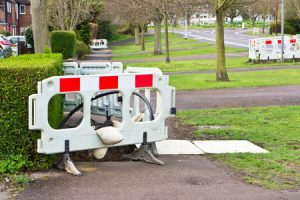
If you want to make a personal injury claim, you need to have enough evidence to establish that negligence occurred.
Some examples of evidence that you can use to help you sue the council for emotional distress in the UK and any physical injuries caused include:
This might seem daunting, but a professional can help. One of the benefits of making a claim with the help of a solicitor is that they can gather evidence for you, such as by talking to witnesses.
Making a formal complaint before you sue the council can help your claim by creating an official report of the incident and a paper trail of correspondence that could be used as evidence to strengthen your claim further. If you believe the council hasn’t followed the correct procedures for your complaint, you can escalate matters to the Local Government and Social Care Ombudsman (LGSCO).
The LGSCO is an independent service responsible for investigating complaints about councils (together with other local public services). Please note that the LGSCO generally does not investigate complaints made more than 12 months after a problem has occurred.
To find out how one of our solicitors could help you prove a claim against the local council or authority, contact our team.
There are many situations you may find yourself in when the council owes you a duty of care. However, breaching this duty may result in you sustaining an injury, and you may be entitled to a council compensation payout.
Below are some examples of the types of accidents and injuries the council may be responsible for if they breach their duty of care.
The council is responsible for ensuring all pavements are safe for all who may use them. Therefore, if a pavement defect is reported to the council, they must fix the problem to prevent the public from sustaining injuries.
For example, you may be walking along a pavement and fail to see a raised paving slab as leaves cover it. If this caused you to trip over, resulting in your arm becoming fractured, you may be eligible to sue the council.
The council is also responsible for keeping our roads safe and hazard-free to prevent road traffic accidents and injuries they may cause to road users. Therefore, if there is a defect in a road, such as surface deterioration, it is the council’s responsibility to resolve the problem.
For example, a pothole may have been reported to the council. If they failed to mark it or fill it in, and this resulted in your car accident, causing a leg crush injury, you may be eligible to make a claim. This is because they failed to keep the roads in a safe condition, causing your injury.
The council also has a duty of care to maintain the safety of public parks and playgrounds to prevent visitors from becoming injured whilst using them. If hazards arise that may place visitors in danger, the council is responsible for fixing them.
For example, a child may be playing on a swing that was not correctly secured. If this resulted in the child falling off and sustaining a head injury, the council may be held liable for breaching their duty of care.
There are many scenarios you may find yourself in when the council owes you a duty of care. If you become injured because of their negligent conduct, our solicitors may help you claim compensation.
In this example case study*, we look at a successful claim against a local council that resulted in Mr A being awarded £95,000 for a severe back injury sustained when they tripped on a broken pavement slab while doing high street shopping. This injury required surgery and extensive physiotherapy, and Mr A was left with permanently reduced mobility that affected his ability to work.
Mr A decided to make a claim against the local authority and sought help from a specialist No Win No Fee personal injury solicitor. They used inspection logs and other evidence to show that the council was aware of the broken slab, but made no attempt to arrange repairs, despite it being on a busy high street.
After the council admitted fault, Mr A was awarded £95,000 in an out-of-court settlement. This payout covered his injuries, lost earnings, privately funded surgery, travel expenses, and physiotherapy costs.
To discuss the specific circumstances of your accident, please get in touch today. Our advisors can provide a case assessment free of charge to determine if you are eligible to claim with one of our solicitors.
Typically, you have 3 years to start a claim against the council for negligence. This time limit begins from the date of injury, as outlined by the Limitation Act 1980.
However, there are exceptions in cases involving a person who is:
Under these circumstances, the time limit is frozen. They may be able to claim at a later date, or a litigation friend can proceed on their behalf. This term refers to an eligible person who represents the claim in the interest of someone who cannot represent themselves.
Those who can act as a litigation friend include:
You can contact an advisor for free today to find out more information about the time limit for your case. They can also address any other queries you may have about how to sue the council. If you are eligible, they could connect you to an expert No Win No Fee solicitor who can draw on a wealth of experience to help you gain compensation.
If you are eligible to claim compensation from the council for a personal injury, one of our solicitors could offer to assist you under a No Win No Fee arrangement, such as a Conditional Fee Agreement (CFA). Under a CFA:
To check whether one of our No Win No Fee solicitors could help you, or to ask questions about council compensation payouts, please contact an advisor. They can evaluate your claim for free, and answer any questions you might have about the claims process. To get started:
*Please note that the case study was illustrative.
Thank you for reading our guide about how to sue a council. If you have any further questions or would like to get a claim started, please speak to a team member.