



By Jo Anderson. Last Updated 21st August 2023. Have you slipped and fell on ice at work? Are you curious as to whether you could be eligible to make an accident at work claim for the harm you have suffered?
In this guide, you will find information on how an employer is responsible for your safety while carrying out work tasks, the accident at work claims process and what compensation you could receive in a successful claim.
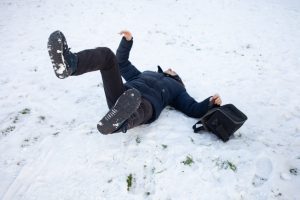
Slipped And Fell On Ice At Work Claims Specialists
Making a personal injury claim after an accident at work cannot only provide compensation for the injuries you have suffered, but it can also reimburse you for financial losses and costs that were caused due to your injury. This can include any loss of earnings you have suffered.
To find out if you can claim work injury compensation, continue to read this guide. Alternatively, you can also contact a member of our team who can offer you free legal advice 24/7. To get in touch:
- Call 0800 073 8801
- Contact us via our website
- Use our live chat to speak with our team
Select A Section
- What Are Slips And Falls On Ice At Work?
- What Could I Claim If I Slipped And Fell On Ice At Work?
- Injuries Caused By Slipping Over On Ice
- Employer’s Duty Of Care To Prevent Slips On Ice
- How To Claim If You Slipped And Fell On Ice At Work
- Talk To Us If You Slipped And Fell On Ice At Work
What Are Slips And Falls On Ice At Work?
When winter draws in, it is important that employers and business are aware if there is going to be any cold temperatures that could bring icy weather. As you will see as we go through this guide, your employer owes you a duty of care laid out in legislation. So it is their responsibility to ensure they have taken reasonable steps to ensure your safety while you are carrying out work tasks.
Part of this responsibility is ensuring that their premises are safe from hazards that could cause an accident that leads to an injury. So it would be expected that if they have control of any outer areas that staff use as pedestrians, these would be gritted to prevent falls on ice.
Ice can be very hazardous and pose the risk of injury. However, not all ice-related injuries are claimable. Sometimes your employer might have done everything within their power, such as carrying out risk assessments or gritting surfaces, but you still sustain an injury. It is crucial that your injuries were caused by employer negligence for you to claim.
If you have slipped and fell on ice at work that caused an injury, call our advisor today to see if you could make a personal injury claim for an accident at work.
What Could I Claim If I Slipped And Fell On Ice At Work?
A personal injury claim could comprise two heads of claim – general damages and special damages. General damages aim to reimburse you for any physical or psychological pain and suffering sustained as a result of your injuries.
For example, you could receive a payout for a spinal injury. If this leaves you bedridden and results in you suffering from depression, you could also be compensated for that.
You might wonder, “How much compensation for a slip and fall at work?”. With each personal injury claim being unique, there is not one definite answer to that question. Therefore, we have compiled a table using compensation amounts from the Judicial College Guidelines (JCG).
The JCG is used by legal professionals to assign value to claims. Although it must be remembered that these figures are not guaranteed.
| Body Part | Severity | Compensation Bracket | Details |
|---|---|---|---|
| Hand | Total or effective loss of both hands. (a) | £140,660 to £201,490 | Serious injury that renders the hands useless. |
| Hand | Serious Damage to Both Hands (b) | £55,820 to £84,570 | Serious damage to both hands which causes permanent cosmetic disability and significant loss of function. |
| Leg | Severe Leg Injuries (b) (i) | £96,250 to £135,920 | The most serious of injuries other than amputation. |
| Leg | Less Serious Leg Injuries (c) (i) | £17,960 to £27,760 | A fracture which has made an incomplete recovery or a serious soft tissue injury. |
| Arm | Severe Injuries (a) | £96,160 to £130,930 | An injury that is shy of amputation but is majorly severe and leaves the injured person little better of than if an amputation had taken place. |
| Foot | Amputation of One Foot (b) | £83,960 to £109,650 | As the ankle joint is lost this is treated very much the same as a below the knee amputation. |
| Foot | Serious (e) | £24,990 to £39,200 | An injury that results in permanent pain from traumatic arthritis, prolonged treatment with the risk of fusion surgery. |
| Ankle | Very severe (a) | £50,060 to £69,700 | Injuries that fall within this bracket are limited and unusual. For example, a transmalleolar fracture of the ankle with extensive soft-tissue damage resulting in deformity. |
| Knee | Severe (a) (iii) | £26,190 to £43,460 | Permanent symptoms, such as pain and discomfort and limitation of movement that require remedial surgery in the long term. |
Special damages may also be awarded if you suffer financial harm from your injuries. For example, if you cannot work due to a leg injury, the loss of earnings that may be incurred may be accounted for by special damages.
It could also cover:
- Travel costs
- Medical expenses
- Care costs
- Home adaptations
Providing evidence of any financial losses could increase your chances of being reimbursed for them.
Please contact our team for more information on how much compensation you might be awarded.
Injuries Caused By Slipping Over On Ice
There are multiple injuries you could sustain if you slipped and fell on ice at work. The injuries you might suffer could include:
○ Breaks and fractures
○ Sprains and strains
○ Brain and head injuries
○ Nerve damage
○ Dislocations
○ Tendon or ligament injuries
○ Scrapes, cuts and similar wounds
If you have encountered any of the injuries provided above due to employer negligence, you could be entitled to a claim. Please do not hesitate to contact our advisors.
Employer’s Duty Of Care To Prevent Slips On Ice
Employers owe their employees a duty of care as per The Health and Safety at Work etc. Act 1974 (HASAWA). Your employer is required to reasonably ensure the safety of the workplace, environment, equipment and facilities.
The Management of Health and Safety at Work Regulations 1999 is also relevant as it outlines employers’ requirements to carry out risk assessments.
A failure to adhere to these legislations, leading to injuries, would constitute negligence. Examples of how this may occur include:
- Despite ice being expected, your employer fails to do a risk assessment and does not grit as a result. You slip while at work and suffer a back injury.
- Your employer doe not provide you with the correct personal protective equipment (PPE), such as shoes with a grip, when you are expected to work in icy conditions. Consequently, you endure a broken wrist injury.
If you slipped and fell on ice at work in a scenario similar to the above examples, please get in touch for free legal advice.
How To Claim If You Slipped And Fell On Ice At Work
If you slipped on ice at work and you’re eligible to make a personal injury claim, you should collect evidence to support your case. Some examples of the evidence you could gather include:
- Medical evidence regarding your injuries, such as a copy of your medical records.
- Any CCTV footage of the accident occurring.
- Photographs of the accident site and any visible injuries you suffered.
- The contact details of anyone who witnessed your accident so that they can provide a statement at a later date.
- Evidence of any financial losses you suffered as a result of your injuries. For example, a payslip could help prove a loss of earnings.
If you’d like to speak to an advisor about starting a claim for injuries sustained in a slip and fall on ice at work, you can get in touch at any time. They may also be able to connect you with one of our No Win No Fee solicitors, who could help you with gathering relevant evidence for your case.
Talk To Us If You Slipped And Fell On Ice At Work
You may find it beneficial to enter a No Win No Fee agreement with one of our solicitors. They typically operate under a Conditional Fee Agreement (CFA) which is a type of No Win No Fee agreement.
If you are represented via a CFA, generally, you will not have to pay any fees to your solicitor upfront or while your case is ongoing. Moreover, you will typically not have to pay your solicitor for the services they provide if your case is lost.
However, you will have to pay a capped by law success fee if your case is won. This fee will be deducted from the compensation and paid to your solicitor.
As previously mentioned, our advisors can provide you with a free consultation to determine your eligibility to claim. If you have a valid claim, they may connect you with a personal injury solicitor from our team.
To get in touch:
- Call 0800 073 8801
- Contact us through our website
- Use our live chat to speak with our team
Learn More About Workplace Claims
We have included more of our guides that may be of benefit when considering an accident at work claim:
- Compensation for a broken elbow at work
- Accident at work claims process explained
- How to make an accident at work claim
Moreover, we have included additional guides that could help you:
- NHS – First Aid
- GOV – Compensation After An Accident Or Injury
- Health and Safety Executive – Employer’s responsibilities
Thanks for reading this guide on how to claim if you slipped and fell on ice at work and would like to claim.