







Free initial advice
A Guide To Broken Bone Compensation Amounts
If you've been hurt, our trusted solicitors can help
No upfront fees. No obligation. A specialist will review your enquiry and come back to you.
Trusted by injured people across the UK




Free initial advice
If you've been hurt, our trusted solicitors can help
No upfront fees. No obligation. A specialist will review your enquiry and come back to you.
Trusted by injured people across the UK
Last Updated 26/09/2025. Breaking a bone can be extremely painful and lead to complications such as infection, nerve or blood vessel damage and long-term problems like joint stiffness. In short, suffering a broken bone is serious and can have significant impacts on your life, especially if the injury wasn’t your fault. If your broken bone was caused by third-party negligence, we encourage you to explore broken bone claims to help balance the scales. It’s only fair. You deserve personal injury compensation.
This is where we can help. Our friendly advisors can provide you with fast and clear guidance on broken bone compensation and help you make those first steps. When it comes to the claims process itself, our solicitors can assist you on a No Win No Fee basis backed by their decades of experience. So why not get started right now? Get in touch with us using the contact details below:
Let Us Answer Your Immediate Questions Right Now
It’s only natural to have questions before starting the claims process, so we’ve answered some of the big ones below:

 4.8
4.8Broken bone compensation amounts for successful claims can vary significantly between cases. This is because the specific factors of each case is taken into consideration when compensation is being calculated. However, settlements for successful claims could result in general and special damages.
General damages is the head of claim that compensates you for suffering, pain and loss of amenity your injuries have caused you. Those calculating general damages for broken bone claims could refer to a publication known as the Judicial College Guidelines (JCG). The JCG provides compensation guidelines for a variety of injuries at different severities. Below, you can see some figures from the latest release of this publication.
These figures should only be used as a guide. Please also note that the first line of the table is not from the JCG, and is purely illustrative.
| The reason you are claiming compensation | The typical payout amount for this | Some extra comments |
|---|---|---|
| Multiple serious injuries with financial costs and losses included. | Up to £250,000 + | A multitude of serious broken bones with associated financial expenses such as care costs and loss of earnings. |
| Severe leg injuries (b) (i) | £117,460 to £165,860 | Injuries that are so severe, that although amputation is not involved, the damages are awarded are similar. This includes extensive degloving, fractures that haven't united along with bone grafting and leg shortening injuries. |
| Severe injury to hips and pelvis (i) | £95,680 to £159,770 | Extensive fractures, representing the highest payout, include those that result in a hip injury, ruptured bladder, or a low back joint. |
| Severe neck fracture (ii) | £80,240 to £159,770 | The payout you will receive depends on how severe your spinal / neck fracture is. |
| Severe fractured foot (d) | £51,220 to £85,460 | The highest payout is for severe injuries, including fractures of both heels. |
| Very severe ankle injuries (a) | £61,090 to £85,070 | The more severe ankle injuries include the likes of transmalleolar fractures. |
| Hand injuries (f) - severe finger fractures. | Up to £44,840 | Partial amputations may be required. This may also result in disturbed sensation, reduced mechanical function, impairment of grip, and/or deformity. |
| Skeletal injuries - multiple fractures to the facial bones | £18,180 to £29,220 | The person will experience a degree of facial deformity of a permanent nature. |
| Skeletal injuries (c) Fractured nose (i) | £12,990 to £28,220 | Multiple or serious fractures that results in permanent damage and/or requires a number of operations. |
| Other arm injuries (d) | £8,060 to £23,430 | A simple fracture of the forearm. |
4.8To be able to make a personal injury claim for fracture compensation, you will need to meet the relevant eligibility criteria. This is:
There are many relevant parties who owe you a duty of care. This includes:
If you can show that your broken bone was the result of a third party breaching their duty of care towards you, you could be able to make a personal injury claim.
If you would like to check your eligibility to make a broken bone injury compensation claim, please contact an advisor.
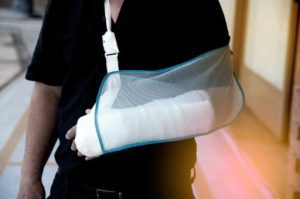
Most of us have heard of the terms ‘broken bones’ and ‘fractured bones’. However, the phrases are frequently used interchangeably and not many people understand why. Generally, there is no specific difference between a broken bone or a fractured bone. However, health care professionals may diagnose you with one or the other.
Your injury may be referred to as a broken bone if it is a traumatic injury that caused your bone to break in half. This injury can also be associated with surrounding nerve damage as they can become bruised, stretched or crushed. As such, broken bones typically have a longer recovery time and require extensive treatment.
Fractured bones typically have the same effects on a person which is why the phrases are used interchangeably. However, they typically have a quicker healing time and there are different types of fractures such as a greenstick or hairline fracture that may require different treatment.
Any bone in our bodies can become broken or fractured if we have been involved in an accident. However, here are some examples of the most common bones that sustain such injuries:
If you have sustained a broken or fractured bone in an accident that was not your fault, you may be eligible to start a broken bone claim. You can contact our friendly advisors to learn more about broken bone compensation amounts or ask any questions regarding the claims process today.
There are several ways in which a broken bone injury could occur. Typical causes of broken bones can include road traffic accidents, accidents at work and accidents in public places. Some examples could include:
These are just a few examples of the types of accidents that could lead to a broken bone. However, not all fractures lead to broken bone claims. As mentioned, you would need to be able to prove that a relevant third-party breached their duty of care towards you, and this caused the accident in which you were injured.
To check your eligibility to make a broken bone claim, please contact an advisor.
If you suffered a bone fracture due to a third party’s negligence and would like to claim, you must do so within the limitation period. The Limitation Act 1980 will typically give claimants three years from the date of the accident that caused their fractured arm to start the legal process.
However, certain circumstances suspend the time limit. These include:
Call our advisors if a third party’s negligence resulted in your arm fracture. If your claim seems like it has a reasonable chance of success, they could help you get it started right away.
Broken bone claims will require you to provide some supporting evidence. The proof you collect will be necessary to demonstrate that the third party’s breach of their duty of care caused your injuries. It will also show the extent of the harm caused, which will help solicitors calculate a possible compensation figure.
We have collated a few evidence examples you could use here;
To ask any questions about gathering evidence or to find out if you could be eligible to make a claim, contact our advisors today using the details provided below.
If you decide to claim broken arm compensation, you could hire a No Win No Fee solicitor to support your claim. Your broken bone claim solicitor could offer you a Conditional Fee Agreement (CFA), which is a type of No Win No Fee arrangement.
When you fund a solicitor in this way, you will not generally be asked to cover an upfront solicitors fee. If your broken arm compensation claim is successful, a success fee will be taken from your broken bone in a car accident settlement. This will be subject to a legal cap. However, when a claim is not successful, you’re not required to pay your solicitor.
Our advisors can discuss the average settlement for a broken arm in the UK. They can also discuss the various other factors in broken bone claims, including what goes into a broken bone claim and the average settlement for a broken jaw. If it sounds like your claim might have a good chance of success, you could be connected to our solicitors.
To get in touch about broken bone claims:
4.8Additional Accident Claims guides:
Links that might prove helpful:
If you have any other queries, such as about the average settlement for a broken arm in the UK call our advisors.