







Free initial advice
A Guide To Making A Spleen Injury Claim
If you've been hurt, our trusted solicitors can help
No upfront fees. No obligation. A specialist will review your enquiry and come back to you.
Trusted by injured people across the UK




Free initial advice
If you've been hurt, our trusted solicitors can help
No upfront fees. No obligation. A specialist will review your enquiry and come back to you.
Trusted by injured people across the UK
Your spleen plays an important role in your body helping you fight off infection, controlling the level of blood cells you have and also filtering your blood. A damaged spleen can lead to a host of symptoms and medical problems, and in the most extreme of cases, you may need to have your spleen removed. If someone else’s negligence damages this organ, you could make a spleen injury claim.
This guide will cover some of the types of accidents or circumstances that could give rise to a valid personal injury claim. This also includes medical negligence. We will also discuss how to prove your claim, and finally, we discuss how one of our experienced personal injury solicitors could assist you on a No Win No Fee basis.
Should you have any questions as you read our guide, you can contact us by:

 4.8
4.8If someone else’s negligence has injured your spleen, then you could make a personal injury claim to recover damages. To make a successful claim, there are three main eligibility criteria which are:
We will cover some of the types of claims that can be made, such as road traffic accidents, accidents at work and public liability accidents, later in this guide. If you think you meet the eligibility criteria, get in touch, as we offer a free case assessment.
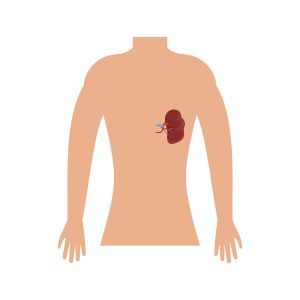
If your spleen stops working as it should, it may start to remove healthy blood cells. This can lead to anaemia, increased risk of infection and bleeding or bruising. A damaged spleen can also weaken your immune system.
You could also receive a direct blow that damages your spleen, such as a blunt force trauma to your chest or side. You may experience pain behind your left ribs, which could be a sign of a damaged, enlarged or ruptured spleen.
A spleen can rupture immediately with injury, or it can happen weeks down the line. If there is a rupture, you may become dizzy and develop a rapid heart rate. This would mean you should go to A&E immediately.
An enlarged spleen could have symptoms that include feeling full even after you eat only a small amount, in addition to some of the symptoms listed above.
You may need surgery to remove your spleen if it is damaged or enlarged in a surgery known as a splenectomy. Sometimes, the spleen is only partially damaged, and only a section needs to be removed.
If you have had your spleen removed, the same eligibility criteria apply. You must have been owed a duty of care, which was breached, and the breach caused an injury. To discuss the specific circumstances leading to your injury, get in touch with our team.

There are many ways to injure your spleen. To be able to advance a claim for spleen injury compensation, you must meet the eligibility requirements discussed previously. To help you think about how a spleen injury could result in a personal injury claim, we will now go through some common ways a spleen injury claim could be made.
All road users owe others a duty of care as they use their vehicles. To meet this duty, they should comply with the rules and regulations in the Highway Code and also adhere to the relevant sections of the Road Traffic Act 1988.
The following would be examples of a strong road traffic accident claim:
You employer has a duty to try to keep you safe whilst you work. This comes from legislation such as the Health and Safety At Work Act 1974. They should, as far as it is reasonably practical to do so, ensure the health, safety and well-being of their employees. This can include things like making sure you are trained to do your specific job role, performing regular risk assessments and providing you with necessary and adequate personal protective equipment (PPE).
There are many ways your employer could breach their duty to you, and in general, if you have been injured at work and it wasn’t your fault, we would like to hear from you. Here are a couple of examples that could be a breach of duty for you to think about:
Accidents can occur in your everyday life, whether at the supermarket, a cafe, a pub or a gym. If someone else’s negligence injures you, you could be entitled to compensation. Those who control public spaces (occupiers) owe a duty to lawful visitors to keep them reasonably safe in the circumstances, and this comes from the Occupier’s Liability Act 1957.
Here are some examples of a breach of duty in a public liability claim
Whilst doctors and medical professionals are there to help you recover from illness and injury, sometimes their standard of care falls below what is required. Those who treat you owe you a duty of care, and to meet this duty, they must meet a minimum standard of care. If they fall below this standard, they are likely to have been negligent, and you could make a spleen injury claim if this negligence caused your injury.
When considering if a medical professional such as a general practitioner (GP), surgeon or nurse has fallen below their minimum standard of care, things like the National Institute for Health and Care Excellence (NICE) guidelines and the Royal College of Nursing duty of care guidelines can be considered.
Here are a few examples of likely medical negligence:
No matter how your injury happened, if you think it might have been due to the negligence of a third party you can contact us to see if you may be eligible to claim compensation.

Any successful spleen injury claim must be proven by evidence. The evidence must prove the eligibility criteria covered in depth above. Namely, you were owed a duty; this was breached, and the breach caused harm in some way.
If you choose to instruct a solicitor to help you with your case, they can offer advice about what evidence might be useful. Here are some things that could be needed:
Many more forms of evidence could be useful in increasing your chances of winning your case. To discuss any aspect of spleen injury claims, please get in touch with a friendly advisor.
Damages in a successful personal injury claim are made up of compensation for your injuries (known as general damages) and also potential damages for your financial losses (known as special damages).
General damages compensate you for several factors, including the severity of the injury, the symptoms caused and the overall long-term prognosis. To help assess factors like this, you may attend an independent medical examination so that a report on your injuries can be produced. Any appointment can be arranged by a solicitor (if you choose to use one) and would be at a time convenient to you.
A medical report can be used in combination with a document called the Judicial College Guidelines (JCG), which details suggested compensation award brackets for a variety of injuries. It is important to note that you could also be injured psychologically as well as physically.
Below is a table containing some of the entries from the JCG, please note that they are just guidelines and also that the top line does not come from the JCG.
| Injury | Severity | Compensation Guidelines | Notes |
|---|---|---|---|
| Multiple Severe Injuries and financial losses | Severe | Up to £250,000 plus | Multiple severe injuries and loss of earnings and financial loss. |
| Spleen | Loss of the Spleen | £25,380 to £32,090 | Loss of the spleen with continuing risk of infection. |
| Spleen Injury | £5,310 to £10,550 | The risks above are not present or are minimal. | |
| Kidney | Serious | £206,730 to £256,780 | Serious and permanent damage to or loss of both kidneys. |
| Loss of One Kidney | £37,550 to £54,760 | With no damage to the other kidney. | |
| Bladder | Serious | £78,080 to £97,540 | Serious impairment with loss of control and function. |
| Long term Interference. | £28,570 to £38,210 | Almost complete recovery but some interference with natural function. | |
| Digestive System | Severe | £52,490 to £75,550 | Severe damage with continuing pain and discomfort. |
| Serious | £20,490 to £33,880 | Serious causing long standing complications. | |
| Scarring | Single Noticeable Scar | £2,890 to £9,560 | A single noticeable scar. |
You may also be able to claim special damages for your financial losses if they are caused by your injuries. Special damages can include:
To discuss the types of losses you are able to claim, reach out to one of our friendly advisors.
4.8Sometimes, people can feel apprehensive about making a claim due to the costs involved. Fortunately, this is something that we can help with. If your case is eligible and you are put in touch with one of our solicitors, they will usually be able to offer you a type of No Win No Fee agreement called a Conditional Fee Agreement (CFA).
A CFA has some advantages that can help you make your case:
At the end of the claim, and only if you have won, will your solicitor be due a success fee. This is deducted from your compensation, and it is taken on a percentage basis. The size of the percentage has a legally imposed limit, and the percentage taken will be agreed upon before you start your case.
If you would like the opportunity to work with one of our experienced personal injury solicitors, you can get in touch with any of the following methods:

Hopefully, you have a better understanding of how to make a spleen injury compensation claim. You may have further questions, and perhaps these further guides will be useful:
External resources:
Thank you for reading our guide about how to make a spleen injury claim. We wish you a speedy recovery and are happy to answer any questions that you may have if you get in touch.