







Free initial advice
A Guide To Body Piercing Claims
If you've been hurt, our trusted solicitors can help
No upfront fees. No obligation. A specialist will review your enquiry and come back to you.
Trusted by injured people across the UK




Free initial advice
If you've been hurt, our trusted solicitors can help
No upfront fees. No obligation. A specialist will review your enquiry and come back to you.
Trusted by injured people across the UK
Body piercings have gained popularity in recent years. However, despite more people getting piercings, there is still little regulation in the UK. Whilst body piercing studios must have a licence, there is no minimum age for most piercings. In Scotland, those under the age of 16 must get written consent from a parent or guardian. Whilst most piercings will go as expected, in some instances, individuals may end up with injuries or illnesses. In this guide to body piercing claims, we look at how you could claim compensation.
We start by looking at what body piercing claims are. Next, we look at how body piercing could go wrong. Then, we look at the public liability claims process before looking at how compensation may be calculated. Finally, we look at how a No Win No Fee solicitor could help you claim compensation.
Get in contact with our team today to find out how we could help you.
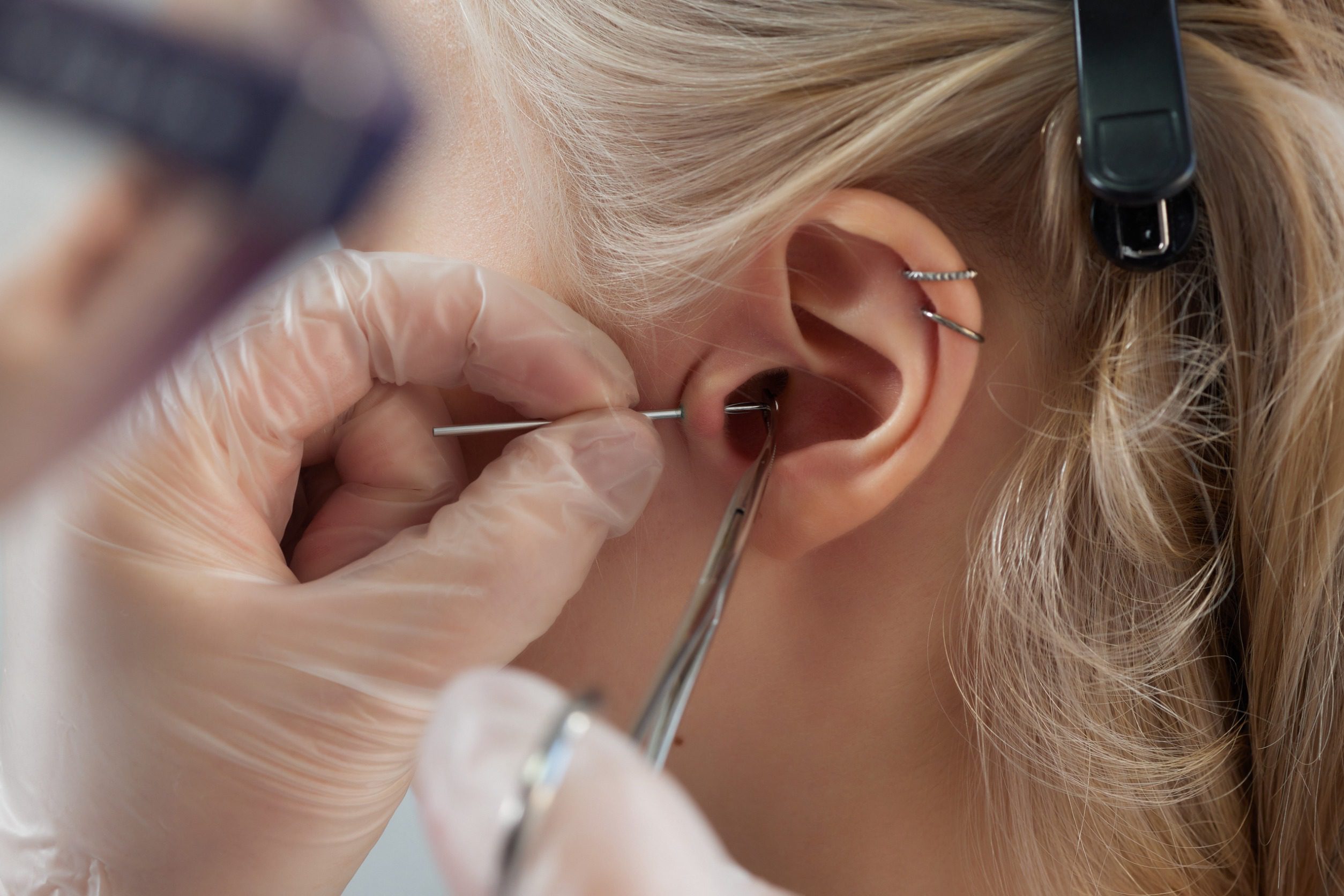
Body piercing claims are a type of personal injury claim filed when a claimant has suffered harmed due to their piercing. When you go to a piercing studio you are owed a duty of care by the individual or organisation responsible for the location to ensure your relative safety.
However, in order to claim compensation, you must show that you meet the standard eligibility criteria. For most personal injury claims, these are that;
When you contact our team they can assess whether you have a valid body piercing injury compensation claim. Contact us for an assessment of your case.
All body piercings carry a risk of infection and injury. However, some piercings may have a higher degree of risk than others.
Potential risks associated with body piercing procedures may include;
Below, we look at examples of different body piercings, and how they could go wrong.
Tongue piercings carry a risk of infection due to high levels of bacteria found in the mouth. Before a piercing is carried out, the tongue and mouth should be disinfected. Additionally, risks associated with a tongue piercing may include nerve damage and harm to the blood vessels.
You can pierce the cartilage at the top of the ear. Such piercings could be more painful than others. Whilst they may be more painful, they can be easier to perform. One of the risks of this type of piercing is an infection. If an infection does occur, puss can become trapped under the cartilage. In some cases, surgery may have to be carried out in order to remove cartilage and drain the puss.
Negligence could lead to infection if the area around the piercing has not been properly cleaned. Practitioners should use a germicidal soap to properly clean the area which is going to be pierced. They should also provide appropriate after-care instructions.
Nose piercings are a relatively common type of piercing. They include piercings to the septum, the bridge of the nose or nostrils. Potential risks of nose piercings could include infections, scarring or developing a bump at the piercing site.
If the jewellery applied has not been properly sterilised, it could infect the new piercing. Infections could be painful, cause swelling and be tender to the touch.
Intimate piercings may include nipple or genital piercings. Broken skin and new piercings may be more at risk of infection. This can be because of the area’s usage during toiletry and sexual function. Infected piercings can cause swelling, pain, and possibly leak a pale fluid. Infected piercings may require antibiotics and other treatment. Extreme cases may require surgery.
A lack of proper instruction can lead to a customer having an infected piercing. Your practitioner must properly instruct you in how to care for your piercing.
If you would like to discuss the circumstances that result in suffering harm, contact our team about body piercing claims today.

As identified earlier, body piercing claims must be made against the party who had a duty of care to you.
If you do choose to claim compensation, your first question may be who is responsible for your body piercing injuries.
Liability for negligent body piercing procedures is held by the owner/ operator of the salon which provided body piercing services. Parties providing body piercing services should have insurance in place. This may include public liability insurance. This type of insurance will provide cover for injuries caused to customers.
Your body piercing claim will be made against this policy. If your claim is successful, the insurance company will settle it.
To get the answers to frequently asked questions about public liability claims, please contact our team today.
Now that we have looked at how you could suffer a body piercing injury and who could be at fault, we will look at how to make a body piercing claim. Any personal injury claim must follow the Pre-action Protocols. These protocols set out the legal process claims must go through. There are also steps which you can take to help your claim.
You should seek medical attention as early as possible. If you have sustained an injury or contracted an infection, you should have your injury or infection treated. In addition, getting medical care creates additional proof of your injuries.
One of the most crucial parts of the body piercing injury compensation claims process is to provide supporting evidence. You must be able to show that the party liable had a duty of care to you, that this was breached and that the breach caused you harm.
For example, you could submit evidence such as;
For more information on how to claim body piercing compensation, please contact our team.

Next, we will cover calculating body piercing compensation. A typical compensation settlement may be made up of two parts. These are called general damages and special damages. General damages compensate for the pain and suffering caused by the botched body piercing. Special damages compensate for the financial impact your body piercing injuries caused.
Below, we look at examples of general damages. We’ve taken these figures from Guidelines published by the Judicial College (JC). This resource may be used by solicitors and other parties involved in valuing personal injury claims.
| Injury | Severity | Notes | Compensation Guideline |
|---|---|---|---|
| Multiple (severe) forms of injury. With special damages. | Severe injuries | Compensation for multiple (severe) injuries and special damages. | Up to £500,000 |
| Psychiatric damage | Severe - A | The person had marked problems impacting all parts of their life. | £66,920 to £141,240 |
| Psychiatric damage | Moderately severe - B | Significant problems across all areas of life but with a better prognosis. | £23,270 to £66,920 |
| Psychiatric damage | Moderate - C | A better prognosis and marked improvement. | £7,150 to £23,270 |
| Facial disfigurement | A - very severe scars | Claimants will typically be under 30. There is a disfiguring cosmetic effect. | £36,340 to £118,790 |
| Facial disfigurement | B - less severe scars | Substantial disfigurement and a significant psychological reaction | £21,920 to £59,090 |
| Facial disfigurement | C - significant scars | Plastic surgery can reduce the worst effects. | £11,120 to £36,720 |
| Facial disfigurement | D - less significant scars | One scar or a number of minor scars. | £4,820 to £16,770 |
| Scarring to other parts of the body. | Noticeable laceration scars or a single disfiguring scar. | Affecting the legs, arms, hands, back or chest. | £9,560 to £27,740 |
| Scarring to other parts of the body. | Several superficial scars or one scar which is noticeable. | Affecting the legs, arms, back, hands or chest. | £2,890 to £9,560 |
Please note, your compensation settlement will be unique to your case. As such, these figures are for illustrative purposes. The figure in row one is an example of what you could be awarded for general and special damages combined. It was not taken from the Guidelines.
Special damages are designed to put you back in the same financial circumstances you were in before your injury. They could compensate for a variety of different expenses including;
There are further examples of what special damages could compensate you for. To find out how your body piercing injury claim may be calculated, please contact our team.
If, after reading our guide to botched body piercings, you think you are eligible to make a claim, our team is here to help you. Our team of experienced No Win No Fee solicitors are experts in assisting people with making body piercing claims.
The benefits of working with a specialist solicitor include;
Before making a claim, people can often be worried about solicitors’ fees. Our team is here to put you at ease. One of our solicitors could handle your claim through a Conditional Fee Agreement (CFA).
A CFA is a way for a solicitor to work on a No Win No Fee basis. You will not have to pay any solicitors fees unless the claim is successful. At this point, you will pay a success fee. The solicitor deducts this fee and it is a set percentage of the compensation awarded to you.
To begin your body piercing injury claim please;

In the final part of our guide we have included several further resources.
Below you can find examples of additional external resources.
Thank you for reading our body piercing claims guide. If you need more information on dealing with negligent body piercing, contact us today.